Back to Work
Product StrategyNew Product DevelopmentSustainability

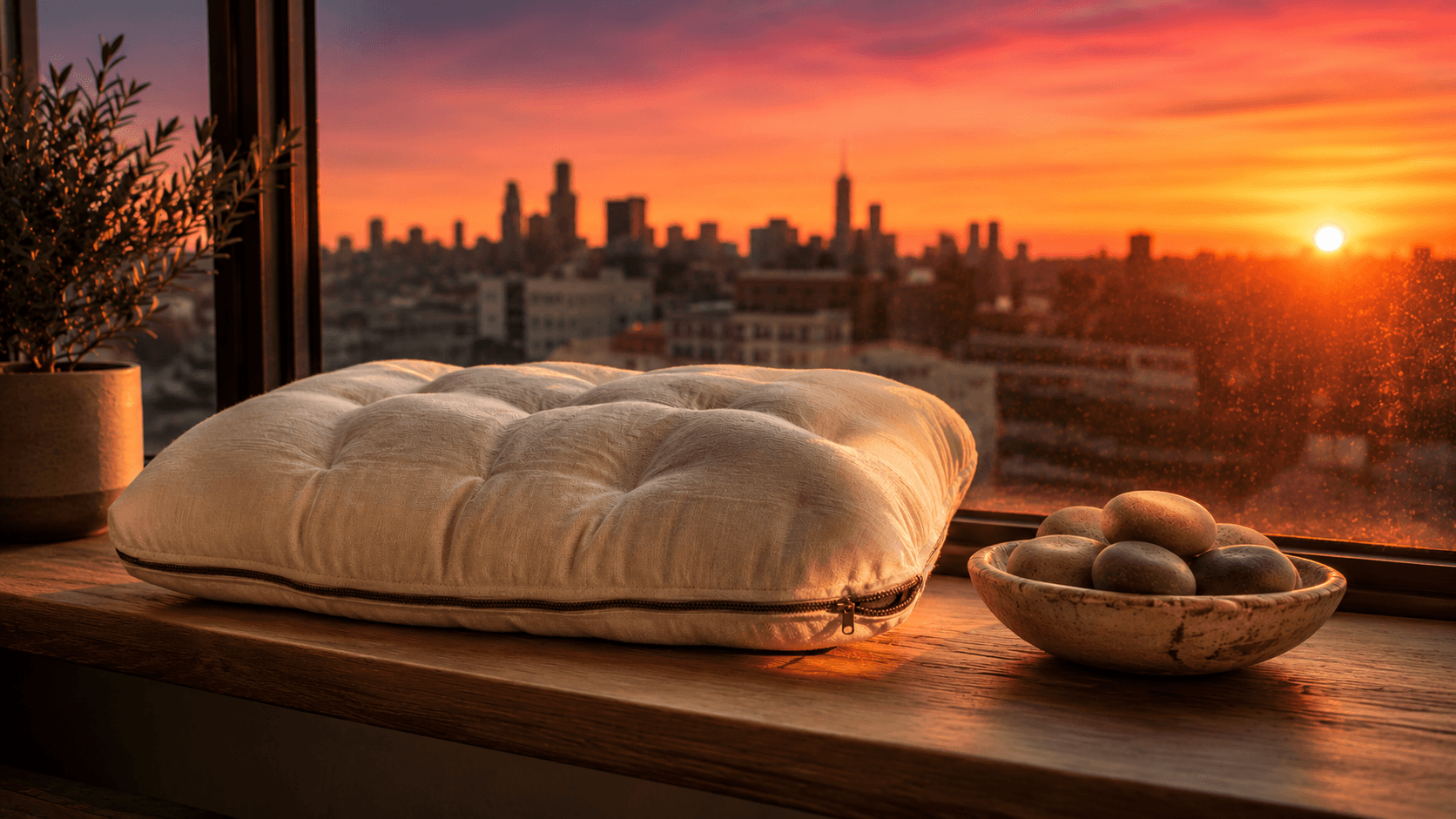
Mura: The first sleep pillow powered by thermal mass

A passive-thermal sleep pillow with no electricity, no wires, and a patentable materials mechanism to improve sleep.
Role
Product Designer
Team
Devanshi Valia · Shrutika Rajput
Duration
March - April 2026
Context
Pratt Graduate Class - Product Development
Mura
The Crisis

Sleep failure isn't a lifestyle problem. It's a public health crisis.

38%

of people globally report poor sleep quality

WIN World Survey, 2025

1 in 3

American workers are too tired to do their job well

Gallup, 2022

$411B

lost by the US economy to poor sleep, every year

RAND Corporation, 2016

The Question

Most of it starts the night before. What if we could change that?

The Science

Your body already knows how to fall asleep. It just needs the right signal.

The brain initiates sleep through peripheral vasodilation — warmth at the skin surface draws heat from the core, accelerating the body's natural thermal descent.

Core body temperature · afternoon → deep sleep
PASSIVE WARMING WINDOW↓ ~1°C37.2°CDaily peak37.0°CSleep preparation36.4°CSleep onset36.0°CDeep NREM nadirLATE AFTERNOON~9PM~11PM~2AM

The ~1°C core drop is the biological trigger for sleep. Peripheral warmth accelerates it.

36%

reduction in sleep-onset latency from passive body warming 1–2 hours before bed

1°C

core temperature drop that triggers deep NREM sleep

Mura's Target
29–33°C

at skin contact. Warm enough to trigger. Never enough to overheat.

The Product

No plug. No subscription. Just nature doing the work.

Zero electricity. Zero synthetic materials. Zero operational carbon. Three thermally distinct materials — generation, buffering, interface — each tuned for a different job.

010203
Heat Engine · Steatite ceramic granules

Steatite, charged.

Soapstone has the highest heat retention of any natural ceramic — fired into 3–5mm granules that store 8.5 kJ at 60°C and release far-infrared radiation through the night, penetrating up to 4cm to drive the vasodilation that starts sleep.

8.5 kJ storedFIR 4–14 μm29–33°C output4–6 hr release
The Ritual

One day, one charge. Then it repeats.

24hEVERY DAYUnzipChargeZipSleep
Morning
Unzip

Unzip the inner pouch and pull the ceramic liner free.

Afternoon
Charge

3–5 hours of sunlight on a windowsill — or 20–30 minutes in warm water.

Evening
Zip

Zip the warm liner back into the pillow. Set it on the bed.

Night
Sleep

29–33°C of sustained warmth for 4–6 hours. No electricity. No wires.

The White Space

A $97.8B market. Zero passive heating products.

Analog wellness is the #1 macro consumer trend of 2025, sleep is the top wellness priority for millennials and Gen Z, and rising energy costs are pushing buyers toward passive solutions. The market is primed — and the category is empty.

6.6%annual CAGR through 2031, sleep aids segment
$4.89Bthermal bedding market today — 100% electric-dependent
0passive thermal pillows exist, at any price point

At $109, Mura does what no $300 pillow can.

Accessible premium price, maximum thermal specialization — alone between the mid-market and the $500+ electric systems.

Mass
$20–60
Sunbeam · Walmart
Mid DTC
$72–179
Casper · Coop · Purple
Mura
$109
Passive thermal · FIR · Zero electricity
Premium Natural
$120–300
Saatva · Gingerlily
Active Thermal
$500–2.5K
Eight Sleep · ChiliPad
$20
$2,500
Only Mura checks all five — at any price point
Passive warmingZero electricityFIR sleep mechanismOEKO-TEX certifiedRecurring revenue
Who Buys

The urban wellness consumer. Done with tech-heavy sleep.

Values-driven buyers who shop DTC, Etsy, and the MoMA Design Store — and 55% are prepared to spend $100+ a month on wellness (HKTDC, 2025).


Age 25–40Urban rentersMajor metros$70–150K+ household incomeSustainability-firstDone with tech-heavy sleep
The Values-Led Urban Professional
Samira
31 · New York · UX Designer · $92K
Oura RingWhole FoodsOrganic beddingAnti-EMF
"Zero electricity. No wires. Your bedroom, your rules."
Instagram · Pinterest · Editorial
Samira's world
The Business

Where the money goes — and where it comes back.

A $95K launch, ~900 units to break even, $3.4M in revenue over five years — the margin is built into the object itself.

One pillow, retail $109Landed cost — $35.80
67% margin$73.20 per unit
$7.65Steatite core + pouch
$7.50Buckwheat + PCM fibre
$6.75Silk + cotton shell
$5.00US assembly
$3.65Certifications
$5.25Packaging

The $38 replacement liner carries 74–79% margin recurring revenue with zero acquisition cost.

Why We Care

Sustainability built into the DNA — not a claim, a product architecture decision.

PEOPLEBetter sleepfor everyoneCULTURECreatinga ritualPLANETZero carbon.Zero waste.PROFITBuilt to last.Recurring revenue.M
Let's Talk

Interested in this work?

I'd love to walk you through the full case study in a conversation. Reach out and I'll get back to you shortly.

🔒NDA work available on request
Typically respond within 24 hours
Happy to jump on a quick call
Let's Talk

Interested In this work?

I'd love to walk you through the full case study in a conversation. Reach out and I'll get back to you shortly.

🔒NDA work available on request
Typically respond within 24 hours
Happy to jump on a quick call
Let's Talk

Interested in this work?

I'd love to walk you through the full case study in a conversation. Reach out and I'll get back to you shortly.

🔒NDA work available on request
Typically respond within 24 hours
Happy to jump on a quick call
© 2026 Radhika Arora · NYC. All rights reserved.
WorkAboutResumeLinkedIn